Why the Lid Decides Whether Bulk Tumbler Buyers Come Back
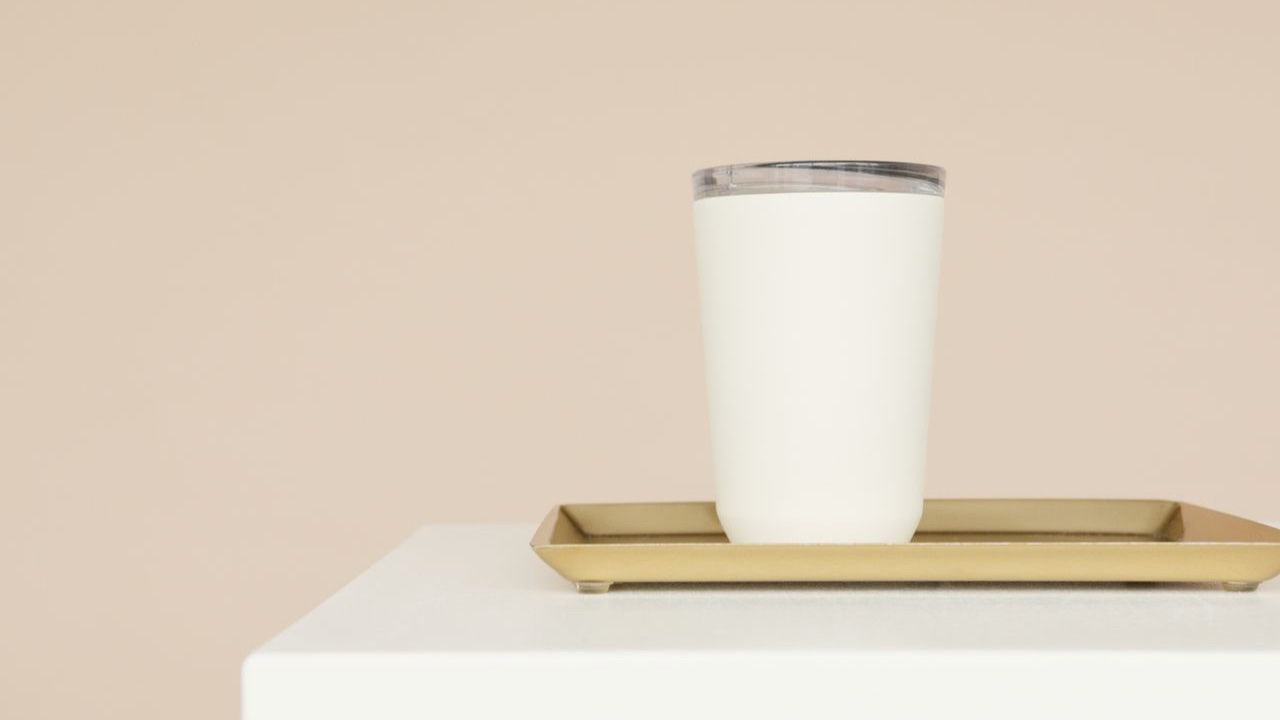
I’ve had two orders in the past few years where the tumbler body was fine and the lid caused most of the customer service problems. One was a sliding lid that developed play in the mechanism after a few weeks of use — not broken, just loose enough that users felt like it wasn’t closing properly, which generated a steady stream of “is this defective?” messages. The other was a push-button straw lid where the button cracked at the hinge point after repeated pressing. The straw mechanism still worked, but the cracked plastic looked cheap and created a hygiene perception issue.
In both cases, the tumbler body itself held up perfectly. The insulation was fine, the finish was intact, the seam welds were solid. The lid sank the product.
When you’re placing orders for stainless steel tumblers bulk, the lid deserves more evaluation time than the body. The body spec is relatively standardized across factories; the lid is where the real variance lives.
Sliding Lids: The Most Common and the Most Variable
The slide-open lid — a flat cover that opens by pushing a tab sideways — is the default format on most commodity tumblers. It’s simple to manufacture, easy to use, and cheap enough that it doesn’t add meaningfully to unit cost. It’s also the lid type with the widest quality range across suppliers.
A well-made sliding lid has a spring or friction mechanism that keeps it in the open or closed position without flopping. The slider itself is thick enough not to flex under finger pressure, and the seal gasket seats cleanly against the drinking opening when closed. A poorly made one has a slider that moves too freely, a mechanism that loses tension within weeks of regular use, and a gasket that shifts out of position in the dishwasher.
The failure mode that generates the most complaints isn’t leaking — it’s the perception of looseness. Users interpret a lid that moves too easily as defective, even if it doesn’t actually leak. For buyers whose end customers are using these tumblers as office or commuter products that spend time in bags, the association between a loose-feeling lid and a potential spill creates anxiety that shows up in reviews.
Before approving a sliding lid design, I test the slider tension specifically: open and close it 200 times in a row and check whether the mechanism feels the same at the end as it did at the start. A lid that still feels positive and snappy after 200 cycles is probably fine for a year of real use. One that’s already loosened up is going to generate complaints within two months.
Push-Button Straw Lids: Higher Appeal, Higher Risk
The push-button straw lid — a hinged or removable cover over a straw port that opens with one button press — has become the dominant format in the premium tumbler market because it looks good in photos, reads as premium, and gives users a drinking experience that’s genuinely more pleasant than a slide lid for cold beverages.
The failure points are concentrated in the button mechanism and the straw itself. The button hinge is the highest-stress point on the entire lid: it’s pressed repeatedly, at an angle, and it needs to maintain its spring function for thousands of cycles. Cheap hinge designs use thin plastic that fatigues and cracks. Better designs use reinforced pivot points and have a visible difference in wall thickness at the hinge area. When I evaluate a sample with this lid type, I pay specific attention to the hinge geometry and the feel of the button spring — a mechanism that already feels soft on a new sample is a problem.
The straw has its own issues. The popular reusable silicone or plastic straws that attach to the lid need to seat securely enough not to fall out when the user drinks, but be removable for cleaning. Straws that are too loose fall into the drink. Straws that are too tight break during removal. The tolerances here are tighter than they look, and factories that don’t have good process control on straw fitment generate a consistent pattern of complaints about straws either falling out or cracking during cleaning.
For buyers targeting the cold beverage, social media-forward market, push-button straw lids are worth the additional evaluation effort. For buyers who need a reliable product that generates minimal after-sale friction, the complexity is a real consideration.
Screw-Top Lids: Still the Right Call for Some Applications
The screw-top or twist-to-open lid gets overlooked in favor of more functional-looking formats, but it’s the right choice for specific use contexts and worth including in a product line rather than eliminating entirely.
Leak resistance is the primary advantage. A properly torqued screw-top lid on a well-machined tumbler neck is more reliably leak-proof than any hinged or sliding mechanism, because the seal depends on consistent clamping force rather than on a gasket staying in position through repeated open-and-close cycles. For buyers whose end customers are using tumblers in situations where a leak would be catastrophic — in a car, a bag with a laptop, a gym bag — the screw-top format’s reliability is a genuine feature rather than a concession.
The user experience trade-off is real: opening a screw-top lid one-handed while driving or walking is harder than pressing a button or pushing a slider. For desk use or applications where the tumbler is stationary most of the time, this matters less. For active use, it matters more.
The other advantage of screw-top lids is durability. There’s very little mechanism to fail. A screw-top lid on a quality tumbler can outlast the product itself without any functional degradation. For buyers whose end customers are likely to keep the product for two or three years, the long-term reliability is worth factoring in.
The Gasket Question That Cuts Across All Lid Types
Every lid type relies on a gasket or seal of some kind, and gaskets are where most leak complaints eventually trace back. The gasket material, the groove it seats in, and whether it’s removable for cleaning are all variables that matter more than the lid format itself.
Silicone gaskets are the standard choice and generally perform well. The issues arise when the silicone is too soft (deforms under repeated compression and loses sealing function) or when the groove is too shallow (gasket pops out in the dishwasher). A gasket that’s captive — meaning it can’t be removed without tools — is less likely to get lost during cleaning but harder to replace when it degrades. A removable gasket is easier to clean and replace but generates complaints when users lose it.
I specifically ask about gasket replacement availability when evaluating a new supplier. A factory that sells replacement gaskets as a separate item is signaling that they expect the product to be used long enough for gasket wear to be a real consideration. That tells me something about how they think about the product’s lifecycle, and it’s a positive signal.
What to Put in Your Sample Evaluation Checklist
For any bulk tumbler order, I evaluate lids against the same set of criteria: mechanism feel after 200 cycles, gasket seat after three dishwasher cycles, button or slider function under cold-wet-hand conditions (gloves if relevant), straw fitment force for straw lids, and overall lid weight relative to the body. A lid that’s noticeably lighter than it looks usually means the wall thickness is below where it should be.
These tests take less than an hour on a single sample and catch the failure modes that generate the most after-sale friction. The factories that have worked through their lid designs properly don’t fail these tests. The ones that haven’t usually show their weaknesses within the first 50 cycles.